Patios
Create a defined surface for seating, dining, and everyday use with scale and placement matched to the yard.
Patios, walkways, retaining walls, and fire pits give a yard places to move, gather, and manage changes in grade. Their visible finish matters, but long-term performance begins with the site, the base, water movement, and the relationship to the surrounding landscape.
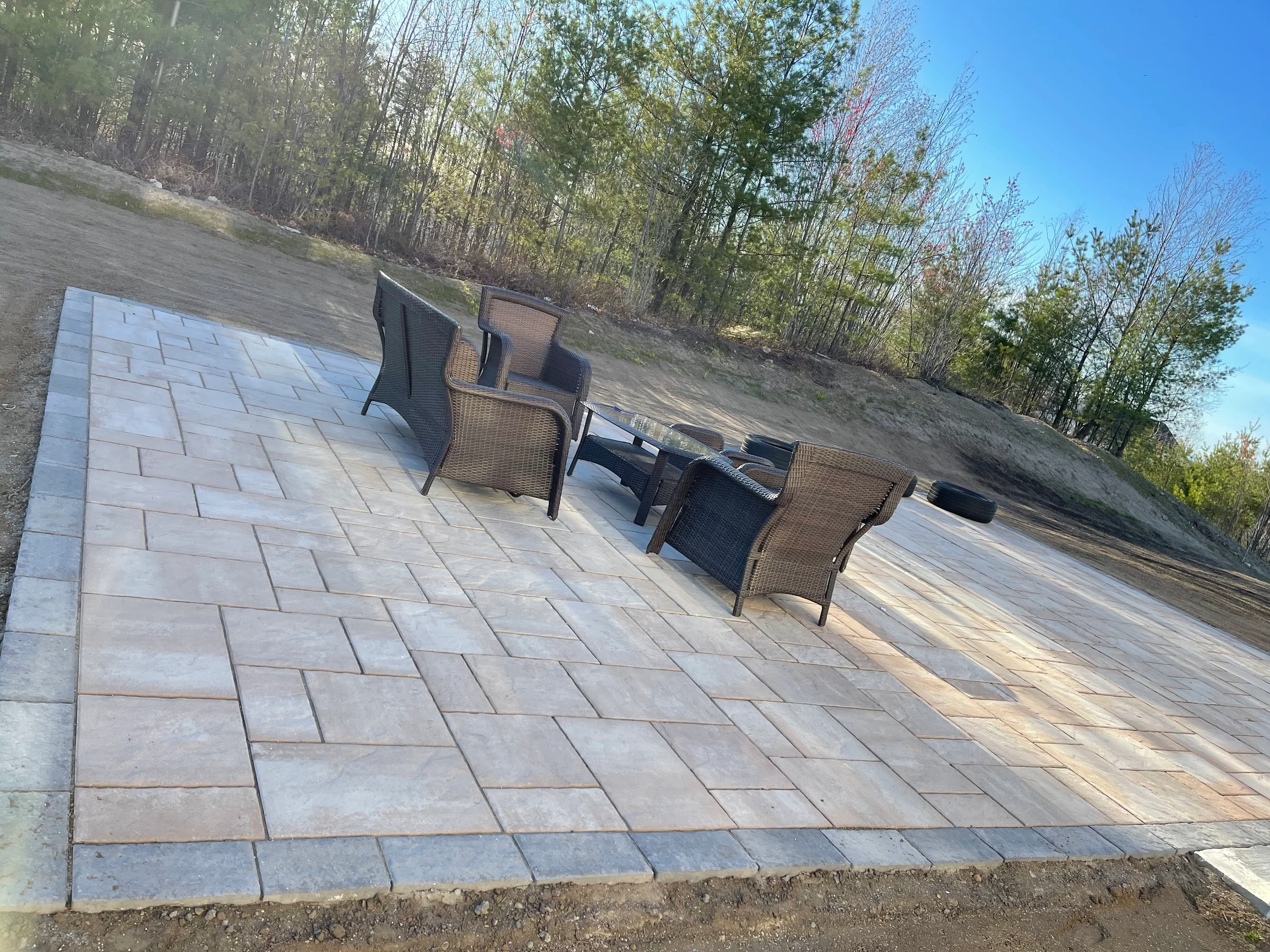
A hardscape should feel connected to the home and yard while answering a clear practical need.
Create a defined surface for seating, dining, and everyday use with scale and placement matched to the yard.
Connect entries, outdoor rooms, driveways, and garden areas with a route that feels natural to use.
Address changes in grade and organize usable areas while considering drainage and the conditions behind the wall.
Establish a gathering point with attention to placement, surrounding space, and how people will approach and sit around it.
Every property brings a different combination of soil, slope, runoff, access, existing utilities, and nearby structures. Material choices make more sense after those constraints and the intended use are understood.
Preparation beneath the finished material supports stability and should match the site and the type of feature.
The plan should account for where water arrives, crosses the property, and leaves the new surface.
Furniture, walking room, transitions, and surrounding plantings all influence the size and shape that will feel comfortable.
Patios, walks, walls, and fire pits begin with how the feature will be used. Grade, runoff, preparation, and construction access then shape a practical proposal.
Clarify whether the priority is gathering, circulation, grade management, or a combination.
Review access, elevations, drainage, adjacent surfaces, utilities, and the space needed for construction.
Compare finish, pattern, edges, transitions, and maintenance expectations within the proposed scope.
Keep joints, surfaces, edges, and drainage paths under observation so small issues can be addressed early.
The company lists patios, walkways, retaining walls, and fire pits among its hardscaping services.
New hard surfaces change how water moves. Planning for runoff and the surrounding grade can help avoid water collecting where it is not wanted.
Feature size, material selection, demolition or site preparation, access, slope, drainage needs, pattern and edge details, and transitions to existing areas can all affect the scope.
Share the service, location, and main concern. Green State Landscaping will review the request and follow up about the estimate.